

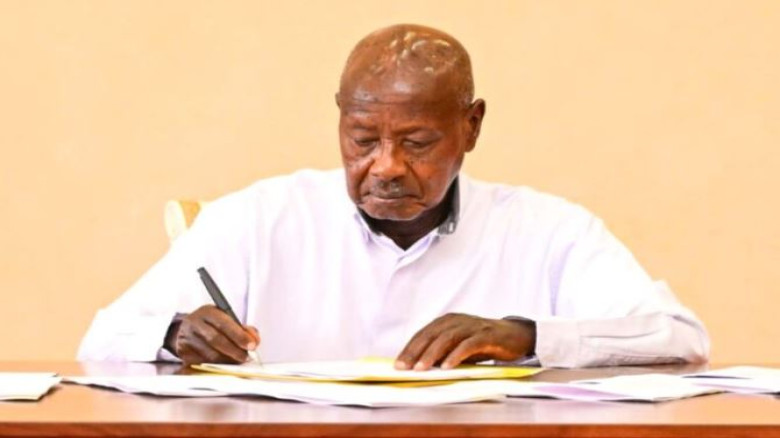
President Museveni signs the Copyright and Neighbouring Rights (Amendment) Act, 2026.
Uganda’s creative industry has officially entered a new chapter. President Yoweri Museveni has assented to the Copyright and Neighbouring Rights (Amendment) Act, 2026, a landmark piece of legislation that signals a robust commitment to protecting the intellectual property of artists, musicians, filmmakers, and digital content creators. Following its passage by Parliament on March 17, 2026, this reform breathes fresh life into the country’s 2006 legal framework, equipping the industry to better navigate the complexities of the modern digital economy.
The most immediate impact of this new law is the significant escalation in penalties for copyright infringement. In a clear move to deter the unauthorized distribution of creative works, the government has set a high bar for accountability. Offenders now face substantial consequences, including fines of up to Shs 50 million, imprisonment for a term of up to 10 years, or both. By imposing these stringent penalties, the Act aims to curb online piracy and safeguard the livelihoods of creators who have long struggled against digital exploitation.

Recognizing the rapid speed at which digital content spreads, the legislation introduces streamlined enforcement mechanisms designed to protect creators in real-time. Both the Registrar of Copyright and individual rights holders are now empowered to issue takedown orders. This provision mandates that online platforms must remove infringing content promptly, granting creators a much-needed tool to exert control over their digital footprint and prevent unauthorized monetization of their work.
While copyright protection in Uganda remains an automatic right upon the creation of a work, the new Act introduces a strategic requirement for registration. Creators must now register their works with the Uganda Registration Services Bureau (URSB) to unlock specific legal remedies, including the ability to enforce takedown notices. This push toward formal registration is coupled with a major boost to royalty management. The Ministry of Justice is now tasked with collaborating with the URSB to establish a comprehensive, national framework for the collection and distribution of royalties, ensuring that artists receive the fair compensation they deserve.
Perhaps one of the most creator-friendly aspects of the 2026 Act is the introduction of a 20-year limit on copyright assignments. To prevent the long-term exploitation of authors, this clause ensures that ownership rights cannot be signed away indefinitely. Once the 20-year period concludes, ownership rights will revert to the original author, allowing creators—and their estates—to regain control and potentially re-monetize their work after an extended period.
This legislation is more than just a legal update; it is a vital catalyst for the formalization of Uganda’s creative economy. By balancing aggressive anti-piracy measures with supportive structures for royalty collection and ownership retention, the Copyright and Neighbouring Rights (Amendment) Act, 2026, provides a strong foundation for local artists to thrive. As Uganda continues to position itself as a hub for creativity, this law ensures that the legal system is finally keeping pace with the talent of its people.
Leave A Comment